Apex Legends Character Models: The Definitive Design & Technical Breakdown
🎮 Exclusive insider analysis! Dive deep into the intricate world of Apex Legends character models. From Wraith's dimensional cloak rigging to Gibraltar's monumental hitbox, we uncover the design philosophy, technical artistry, and hidden details that define every Legend—including how they translate to the Apex Legends Mobile experience for Indian players.
The Anatomy of a Legend: More Than Just a 3D Model
When Apex Legends burst onto the battle royale scene, it wasn't just the fast-paced gameplay that captivated millions. It was the characters—the Legends. Each is a masterclass in 3D character modelling, animation, and narrative design. For Indian gamers, especially those diving into the mobile version, understanding these models is key to mastering the game. Unlike many competitors, each Legend in Apex is not a mere skin but a fully realised entity with unique skeletal rigs, hitboxes, and animation sets that directly impact gameplay.
📌 Did You Know? The original character models for Apex Legends were built upon a heavily modified version of Valve's Source engine, requiring Respawn's artists to develop innovative solutions for the game's signature fluid movement and abilities.
The development team at Respawn Entertainment has consistently emphasised a "gameplay first" philosophy for their character models. This means every visual detail, from the flow of Lifeline's dreadlocks to the bulk of Caustic's armour, is scrutinised for its effect on player readability, hitbox consistency, and overall game balance. This becomes doubly important on mobile, where screen size and touch controls change how players perceive and interact with these models.
From Concept Art to In-Game Asset: The Pipeline
The journey of an Apex Legends character model is a marathon of artistic and technical collaboration. It begins with extensive concept art, exploring cultural influences, personality, and silhouette. For example, the design of Rhapsody, a Legend introduced specifically for the mobile platform, drew inspiration from global music cultures, aiming to create a vibrant and recognisable silhouette even on a small screen. You can learn more about her unique design in our dedicated guide on Apex Legends Mobile Characters Rhapsody.

The intricate pipeline from 2D concept to fully rigged 3D character model in Apex Legends.
Once the concept is locked, 3D modellers use tools like Maya or ZBrush to create a high-polygon model with incredible detail—every stitch, scratch, and piece of armour is crafted. This model is then "retopologised" into a lower-polygon version optimized for real-time rendering in the game engine. The model is then "rigged" with a digital skeleton, allowing animators to bring it to life. This rigging process is where Legends get their unique physicality; Pathfinder's bouncy, elastic movements require a very different setup compared to Revenant's stiff, menacing gait.
Silhouette & Readability: The Cornerstone of Competitive Design
In the chaos of a firefight in King's Canyon or World's Edge, a player must instantly identify an enemy Legend. This is where silhouette readability becomes paramount. Respawn's artists are masters of this craft. Bangalore's military posture and asymmetric armour, Bloodhound's avian helmet and flowing cape, Mirage's sleek jacket and holographic emitters—each silhouette is distinct from 100 meters away.
Case Study: Wraith's Interdimensional Skirmisher Design
Wraith's model is a study in minimalism and mystery. Her slim, athletic frame is designed for agility, directly correlating to her smaller hitbox (a constant topic in balance discussions). Her colour palette is muted, but her model features glowing blue elements that hint at her void-walking abilities. The slight hunch in her posture and the distinctive hood create a silhouette that screams "elusive assassin." Her running animations, with blades held backwards, are uniquely hers and have been mimicked across the gaming industry.
This principle of strong silhouettes is crucial for the mobile adaptation. On smaller screens, details can get lost. The Apex Legends Mobile development team had to ensure that these key silhouette traits remained crystal clear, sometimes making subtle adjustments to proportion or accessory size to maintain instant recognisability for players enjoying the game on iOS and Android devices across India.
Cultural Influences & Localisation in Model Design
Apex Legends boasts a diverse roster, and their models reflect this. Seer's design incorporates elements of West African futurism, while Vantage draws from survivalist aesthetics. For the Indian gaming community, this diversity is not just appreciated; it enhances relatability and global appeal. The developers have shown commitment to this by ensuring accurate representation in textures, accessories, and animations, avoiding stereotypical tropes.
This attention to detail extends to the Apex Legends Mobile iOS Download Requirements. The game's assets, including these detailed character models, are optimized to deliver high fidelity without overwhelming device storage or performance—a key consideration for players in regions with varied device capabilities.
Under the Hood: Rigging, Animation, and Hitboxes
The true magic of an Apex Legends character model lies beneath its surface. The rig—the digital skeleton and control system—is what allows for the game's famously smooth and responsive movement.
The Hitbox Conundrum: Balancing Visuals with Fair Play
One of the most debated aspects in the Apex community is the relationship between a Legend's visual model and their hitbox (the invisible collision area used to register shots). Initially, hitboxes closely matched the visual model, leading to significant balance issues (e.g., Gibraltar being much easier to hit than Wraith). Respawn's solution was the "Low Profile" and "Fortified" perks, but they have continuously refined hitboxes to be more standardized while respecting unique model shapes.
⚙️ Technical Insight: Modern Apex Legends hitboxes are composed of multiple capsule colliders approximating the torso, head, and limbs, rather than a single complex mesh. This improves server performance and hit registration consistency—a critical factor for the smooth experience on Apex Legends Mobile on Gameloop emulator and native devices.
Animation State Machines: Fluidity in Motion
Each Legend shares a core library of animations (running, jumping, reloading), but they also have unique "characteristic" animations for idle states, intro quips, and ability use. Octane's stim injection, Loba's graceful bracelet throw, and Newcastle's shield deployment are all hand-animated to reinforce personality. These animations are managed by complex state machines that blend movements seamlessly, contributing to the game's fluid feel.
The transition to mobile required a reevaluation of these animations. Some elaborate gestures might be scaled down or simplified to maintain clarity and performance on touchscreen devices, as detailed in discussions around the anticipated Apex Legends Mobile Release Date 2024 updates.
Optimised for Your Pocket: Character Models on Apex Legends Mobile
Porting the rich, detailed world of Apex Legends to mobile was a monumental task. The character models, in particular, required careful optimization. While the core design and silhouette remain sacrosanct, the polygon count and texture resolution are dynamically adjusted based on device capability.
Performance vs. Fidelity: The Mobile Developer's Dilemma
To achieve a stable 60 FPS on a wide range of devices, the mobile version uses Level of Detail (LOD) systems more aggressively. At a distance, Legends are rendered with simpler models and fewer textures. As you get closer, higher-detail models fade in. This process is virtually seamless, ensuring gameplay remains smooth whether you're sniping or in a close-quarters fight. This technical achievement is why the Apex Legends Mobile Download for iOS package is so efficient despite its visual quality.
Touch controls introduced another layer of design consideration. The models and their associated abilities need to be intuitively understood through a UI. The visual feedback from abilities—like the colour and shape of Bangalore's smoke canister or the arc of Fuse's knuckle cluster—had to be extra clear on a smaller display. This focus on clarity is a constant in the mobile version's development, as seen in the iterative updates following its initial Apex Legends year released on mobile platforms.
Exclusive Mobile Content & Models
Apex Legends Mobile wasn't just a port; it introduced exclusive content, including unique Legend Rhapsody. Her model was designed from the ground up with mobile in mind. Her visual effects are bright and clear, her silhouette is bold, and her animations are designed to read well on small screens. This represents a fascinating evolution in character design philosophy tailored to a new platform. Players eager to experience this can find the game via the Apex Legends Mobile iOS App Store Download.
Furthermore, rumours of a major overhaul, sometimes referred to by the community as Apex Legends Mobile 2.0 Download, suggest ongoing refinements to character models and animations to push the boundaries of mobile graphics even further.
How Character Models Dictate the Gameplay Meta
Ultimately, a character model in Apex Legends is not just art—it's a gameplay variable. A Legend's size, animation quirks, and ability visual effects directly influence the "meta" (the most effective tactics available). Gibraltar's fortified hitbox makes him a natural tank. Pathfinder's grapple animation gives him unique mobility options. Horizon's floaty animations during her gravity lift affect aiming.
For the Indian competitive scene, understanding these nuances is the difference between a good and a great player. Knowing that an enemy Valkyrie's jetpack has a distinct audible and visual cue, or that Revenant's crouch walk is faster and lower than other models, can be leveraged for strategic advantage. This deep knowledge is what our guides aim to provide, helping you master the game whether you're playing on console, PC, or via Download Apex Legends Mobile for iPhone.
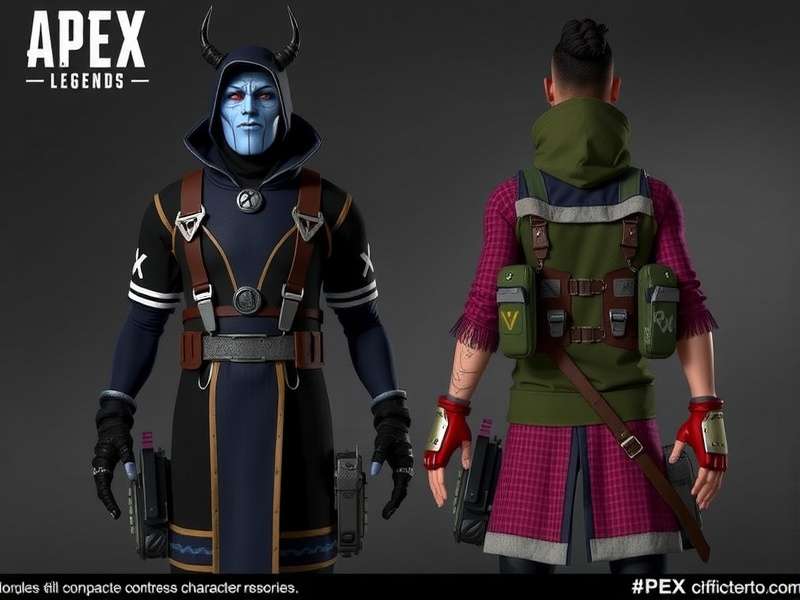
The visual design and underlying model mechanics of each Legend create a dynamic and ever-evolving gameplay meta.
The Future of Apex Legends Models
As technology advances, so will the fidelity and complexity of character models. With the advent of more powerful mobile chipsets and potential future console generations, we can expect even more detailed textures, advanced cloth and hair simulation, and possibly real-time ray-traced reflections on armour and abilities. The core principles of readability, personality, and gameplay integration, however, will remain the guiding stars for Respawn's artists.
Staying updated is key. Always ensure you're getting the latest version through official channels like the Apex Legends Mobile iOS Store Download to experience the most refined models and animations.
Community Voice: Rate & Discuss
Your opinion matters! How do you feel about the design of your favourite Legend? Share your thoughts and rate this comprehensive guide.